film storyboard examples

10 Great Film Storyboard Examples
The Hollywood film examples used in this article were originally published by boords.com and can be found on this link: https://boords.com/storyboard-examples

Before a single camera rolls or a light is rigged, the entire soul of a movie is captured on paper. Film storyboard examples serve as the ultimate bridge between a writer’s words and a director’s vision, acting as a visual shorthand that saves time, money, and creative sanity on set.

Whether it’s the meticulous, terrifying precision of Alfred Hitchcock’s sketches or the high-octane action beats found in a Marvel blockbuster, studying these professional blueprints reveals the “how” behind cinema’s most iconic moments. In this post, we’re breaking down world-class examples to show you how to translate your own ideas into a compelling, frame-by-frame narrative.

FILM STORYBOARD EXAMPLES

ANIMATION STORYBOARDS

Spiderman 2 (2004)

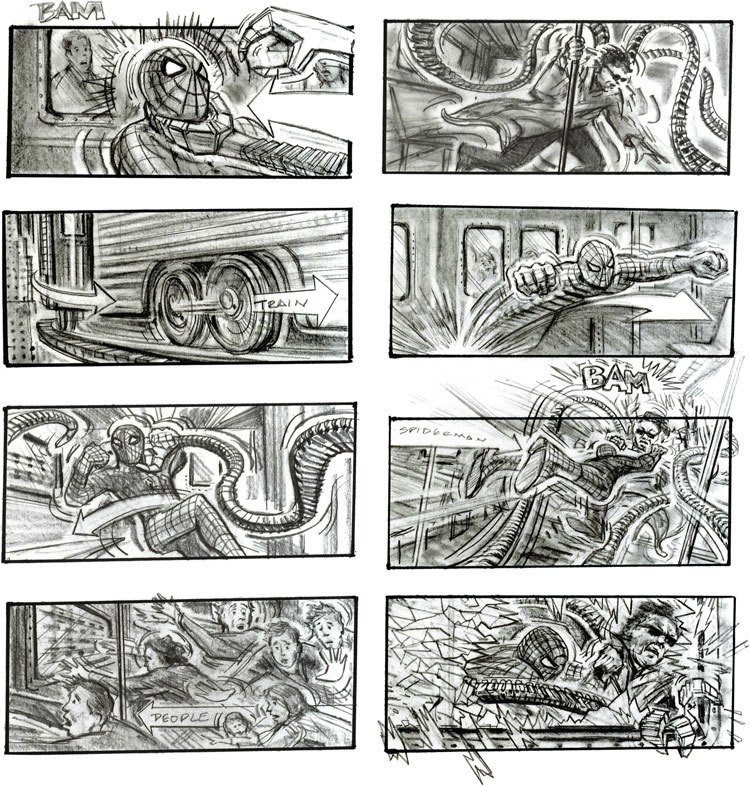
Spiderman 2 fight scene storyboard page

This storyboard for Spider-Man 2 masterfully translates high-octane cinematic energy into static frames by using bold directional arrows to dictate character trajectories and dynamic speed lines to simulate the momentum of a rushing subway. 

It uses framing in a clever way, utilising tight crops and cluttered compositions to create a sense of claustrophobia and high stakes, while jagged impact lines and BAM text effects emphasise the physical power of the combat. 

Brilliantly executed film storyboard examples here.

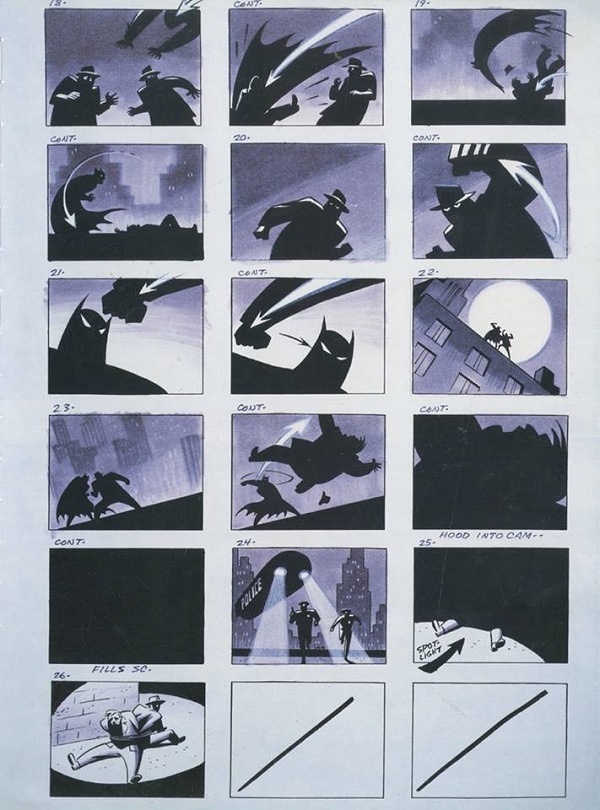
Batman: The Animated Series (1992)

Batman: The Animated Series film storyboard examples

Batman: The Animated Series is one of the exceptionally effective film storyboard examples due to its use of high-contrast chiaroscuro lighting and minimalist silhouettes, which immediately establish a moody, neo-noir atmosphere.

By relying on sharp black shapes against a muted purple background, the artist emphasises strong character poses and clear silhouettes, ensuring the action is readable even in chaotic fight sequences.

The inclusion of sweeping directional arrows provides a clear guide for character momentum, such as the arc of a cape or the force of a punch, while cinematic framing, like the iconic moonlit rooftop shot and the “hood into cam” transition, dictates a sophisticated visual rhythm that mirrors the final animation.

VINTAGE STORYBOARDS

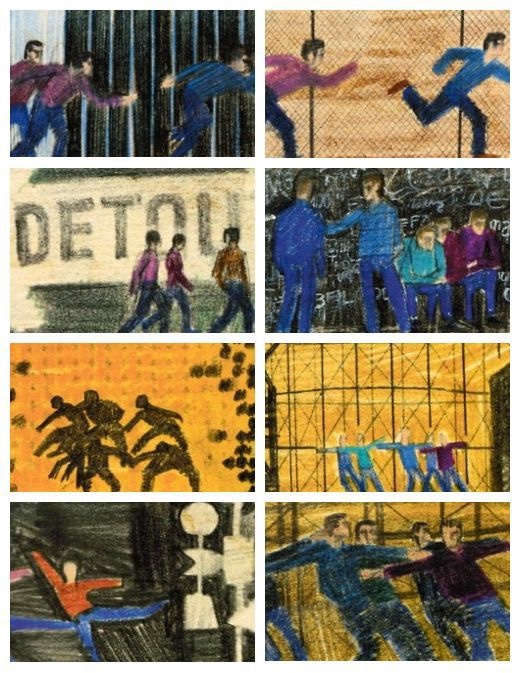
West Side Story (1961)

Batman: The Animated Series Storyboard page

This storyboard for the 1961 film West Side Story reflects the distinctive “reductive” philosophy of Saul Bass, the legendary graphic designer who transformed movie marketing and title sequences into high art.

Bass was known for stripping a concept down to its most primitive, jagged, and powerful visual elements, a technique clearly visible in these frames. Rather than focusing on anatomical detail, he uses color-blocked silhouettes and thick, expressive pastels to prioritize the kinetic energy and geometric rhythm of the choreography.

In terms of film storyboard examples, the boards are highly effective because they treat the screen as a canvas for abstracted motion; the figures are rendered as vibrant slashes of blue, purple, and orange that contrast sharply against urban textures like chain-link fences and “DETOUR” signage.

By using minimal detail, Bass ensures that the director and cinematographer focus on the graphic composition of the shot, specifically the tension between the horizontal lines of the city and the diagonal, lunging movement of the gangs.

In terms of film storyboard examples, this style mirrors his iconic poster work, emphasising that a film’s visual story is told through bold shapes and symbolic color rather than literal representation.

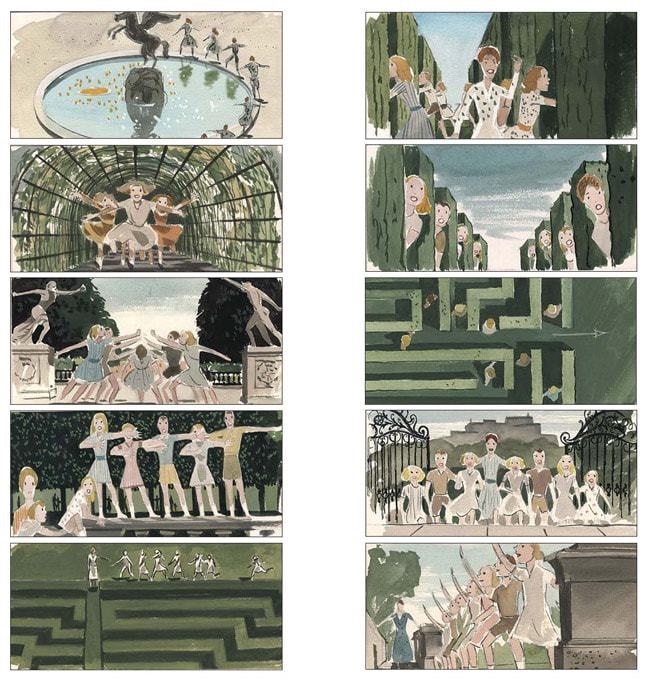
The Sound of Music (1965)

The Sound of Music Storyboard page

The storyboard for The Sound of Music employs a vibrant, painterly aesthetic that utilises soft watercolors and ink to capture the film’s whimsical and energetic spirit.

Unlike the gritty, monochromatic sketches typical of action films, these panels feature a lush colour palette of greens, pale blues, and warm skin tones, which effectively communicate the bright, outdoor setting of the musical numbers.

The artist focuses on ensemble blocking and scale, using wide shots to track the children’s synchronised movements through grand environments like garden mazes and fountains.

By emphasising playful character expressions and the flow of the characters’ clothing, the storyboard translates the joyful choreography and rhythmic pacing of the film’s iconic sequences into a series of charming, illustrative snapshots.

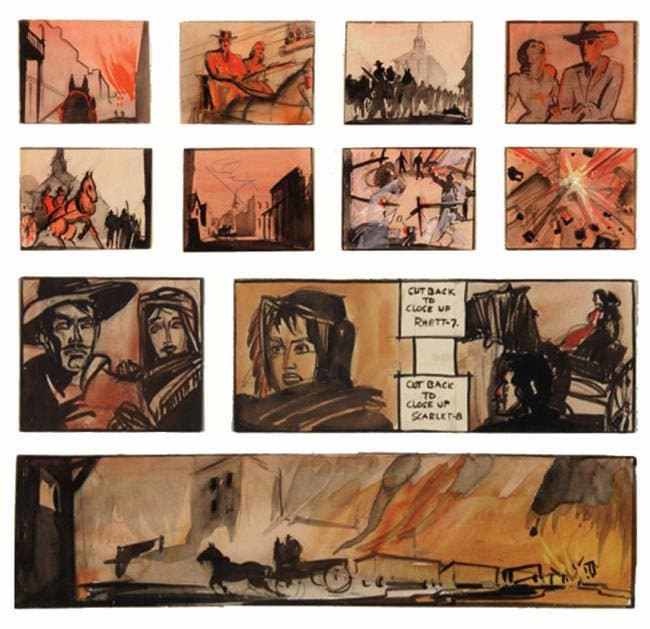
Gone With The Wind (1939)

Gone with the wind Storyboard page

This storyboard for the 1939 epic Gone with the Wind utilises a dramatic, warm color palette dominated by oranges and sepia tones to vividly pre-visualise the “Burning of Atlanta” sequence.

The artist employs a painterly ink-and-wash technique that prioritises atmospheric lighting and emotional scale over technical detail, using silhouettes of horses and carriages against a backdrop of rising flames to establish a sense of peril.

This board is particularly effective for its cinematic pacing, transitioning from wide, chaotic spectacle shots to tight, expressive close-ups of Rhett and Scarlett, even including specific editing notes like “CUT BACK TO CLOSE UP” to guide the film’s final transition between action and character drama. One of the best film storyboard examples.

BLOCKBUSTER STORYBOARDS

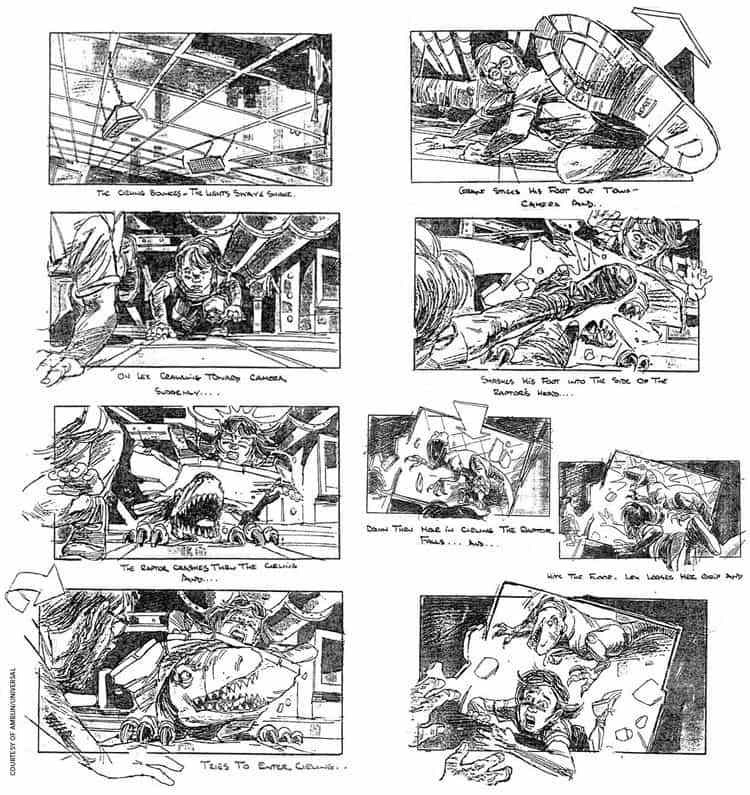
Jurassic Park (1993)

Jurassic Park storyboard

The storyboard for Jurassic Park is a masterclass in high-stakes visual storytelling, utilising forced perspective and aggressive “to-camera” movement to heighten the sense of terror.

In these panels, the artist creates an immersive experience by having characters like Tim and the Velociraptor break the boundaries of the frame, with elements such as a boot or a snapping jaw appearing to lunge directly at the viewer.

Detailed textual annotations accompany each sketch, such as “The Raptor crashes thru the ceiling”, to provide essential context for the special effects team, while large block arrows indicate complex camera pans and character lunges. This meticulous planning of the “kitchen attack” sequence ensures that the frantic, claustrophobic pacing is fully established long before the groundbreaking CGI is even applied.

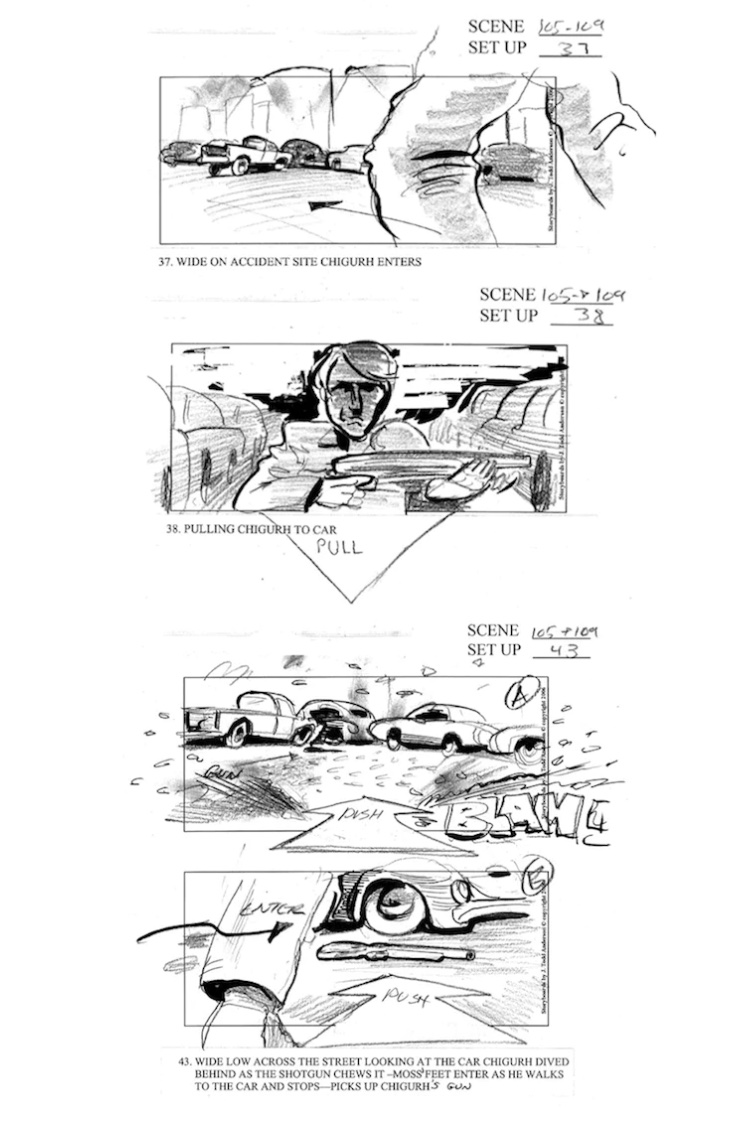
No Country for Old Men

No Country for Old Men storyboard page

The storyboard for No Country for Old Men demonstrates a clinical, highly technical approach to pre-visualisation that mirrors the Coen Brothers’ famously precise directing style.

These panels prioritise clear spatial orientation and camera movement, using sharp pencil sketches and large, hollow arrows labeled “PULL” and “PUSH” to indicate complex dolly shots and lens zooms.

The artist uses dynamic perspective, such as a low-angle shot across a street cluttered with cars, to map out Chigurh’s movements with intense clarity.

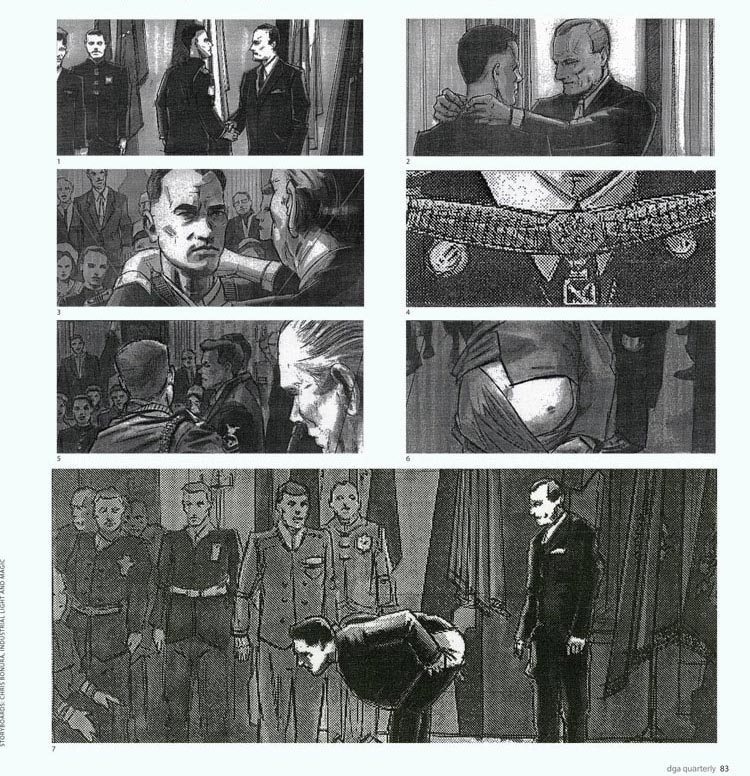
Forest Gump (1994)

Forest Gump storyboard page

The storyboard for Forrest Gump adopts a detailed, monochromatic style that emphasises realistic anatomical proportions and complex character interaction.

Each frame is rendered with fine line work and subtle cross-hatching to create a sense of cinematic lighting and volume, particularly in close-ups that focus on facial expressions and the tactile details of medals and uniforms.

The sequence uses a mix of medium and tight shots to capture the solemnity and physical humor of the scene, such as the protagonist’s stiff posture and the specific, awkward gesture of showing his wound to the President.

SCI-FI STORYBOARDS

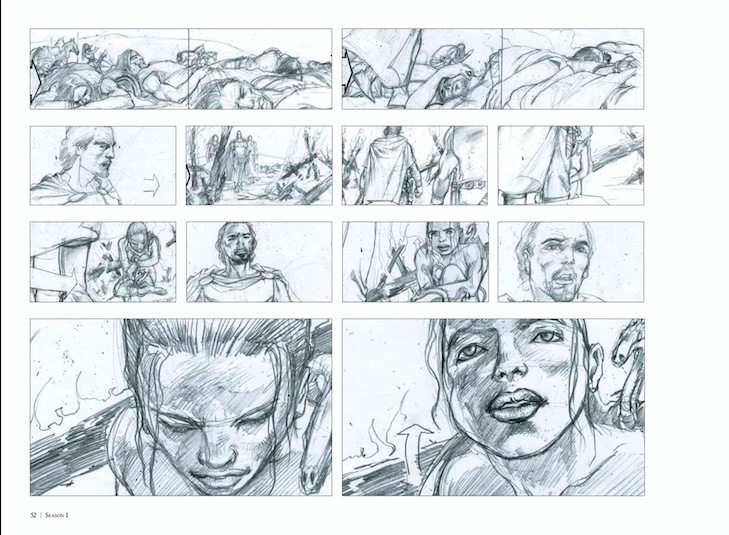
Game of Thrones

Game of Thrones storyboard page

This storyboard from Game of Thrones Season 1 utilises a refined pencil-sketch style that balances technical precision with high emotional impact. The artist uses soft hatching and shading to create realistic facial expressions and atmospheric depth, particularly in the extreme close-ups of

Daenerys that conclude the sequence. Wide, cinematic panels at the top establish a sense of scale, while clear directional arrows indicate camera movements and character focal points as the scene transitions toward a dramatic reveal.

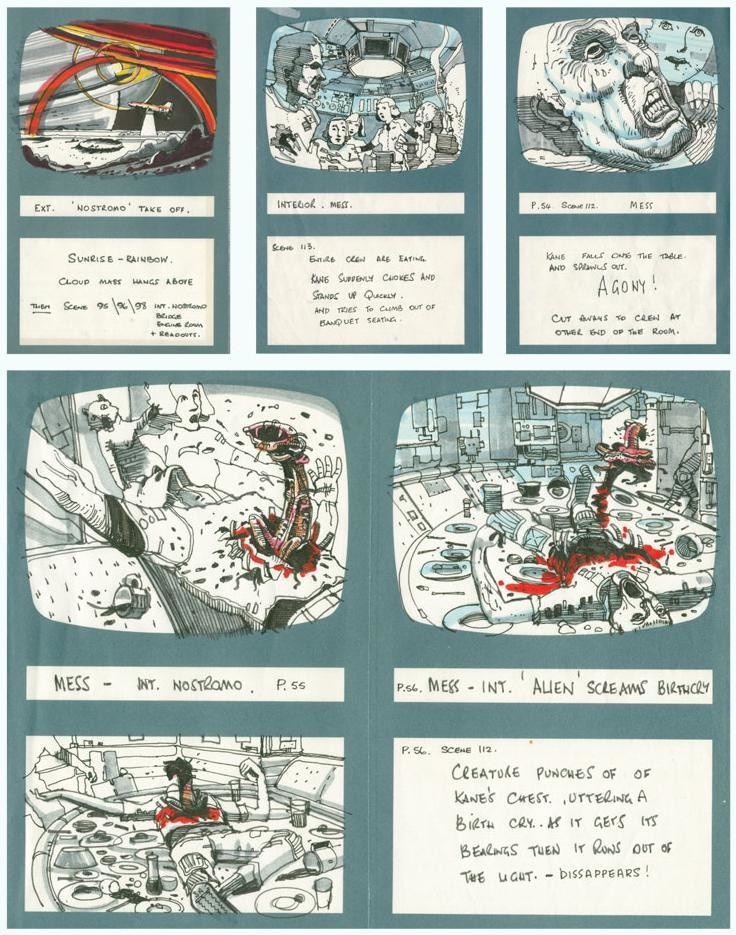
Alien

Alien storyboard page

The storyboard for Alien showcases a highly detailed, illustrative style that blends technical precision with visceral horror. Each frame is meticulously rendered with fine linework and a muted, cinematic color palette, often framed within rounded “television-style” borders to mimic the look of monitors aboard the Nostromo.

The artist utilises dramatic shading and high-contrast ink washes to emphasise the gritty, industrial textures of the ship’s interior, while the inclusion of handwritten production notes.

Storyboarding in Motion GraphicS

Motion graphics, with their dynamic and engaging visual elements, have become an integral part of digital storytelling. Behind every captivating motion graphic lies a meticulous planning process, and at the heart of this process is storyboarding. In this section, we’ll look at the significance of storyboarding in motion graphic projects and explore how it acts as a guiding force for designers to create compelling narratives.

Storyboarding is used in many areas from film to theatre, animatics and interactive media however for the purpose of this article we will concentrate on it’s use in motion graphic design.

Understanding Storyboarding:

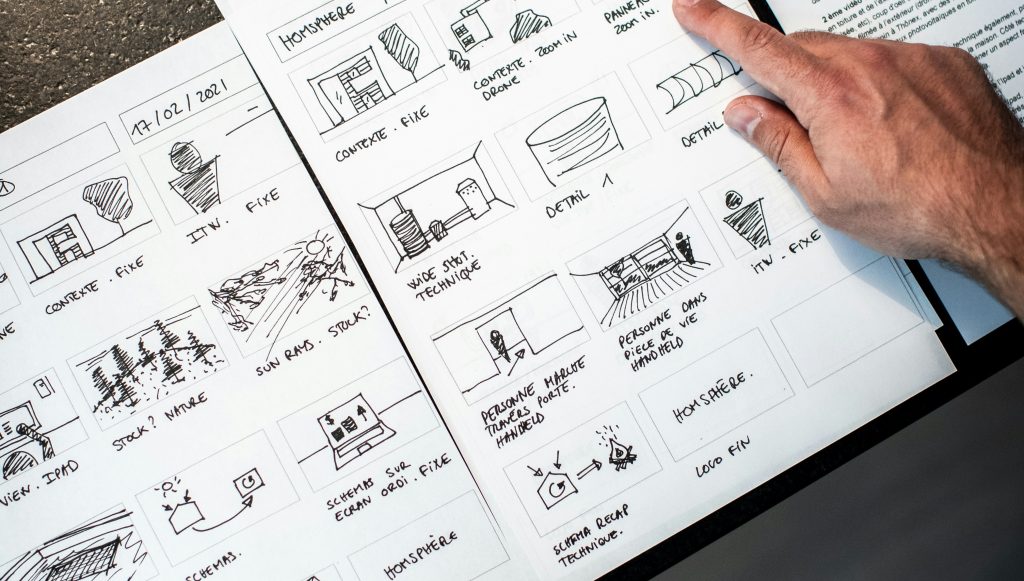
Storyboarding is the process of sketching or illustrating a sequence of images that represent the key frames or scenes in a motion graphic project. It serves as a visual blueprint, outlining the flow of the animation, transitions, and the overall composition. Think of it as a roadmap that ensures a clear and cohesive story is communicated through the motion graphics.

film storyboard examples

Streamlining the Creative Process:

Visualisation of Ideas:

Storyboarding allows designers to translate abstract concepts into tangible visuals. It provides a platform to brainstorm and experiment with different ideas, ensuring that the creative vision aligns with the project’s objectives.

Structuring the Narrative:

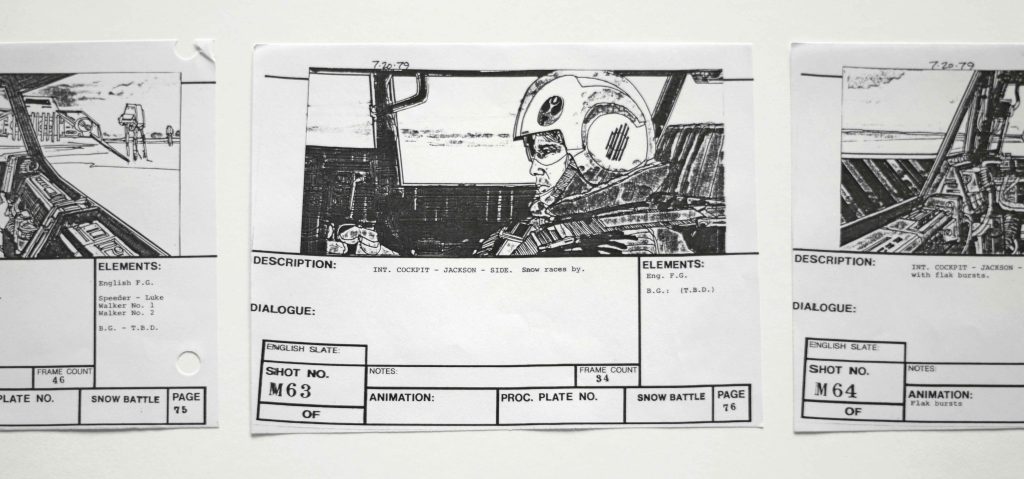
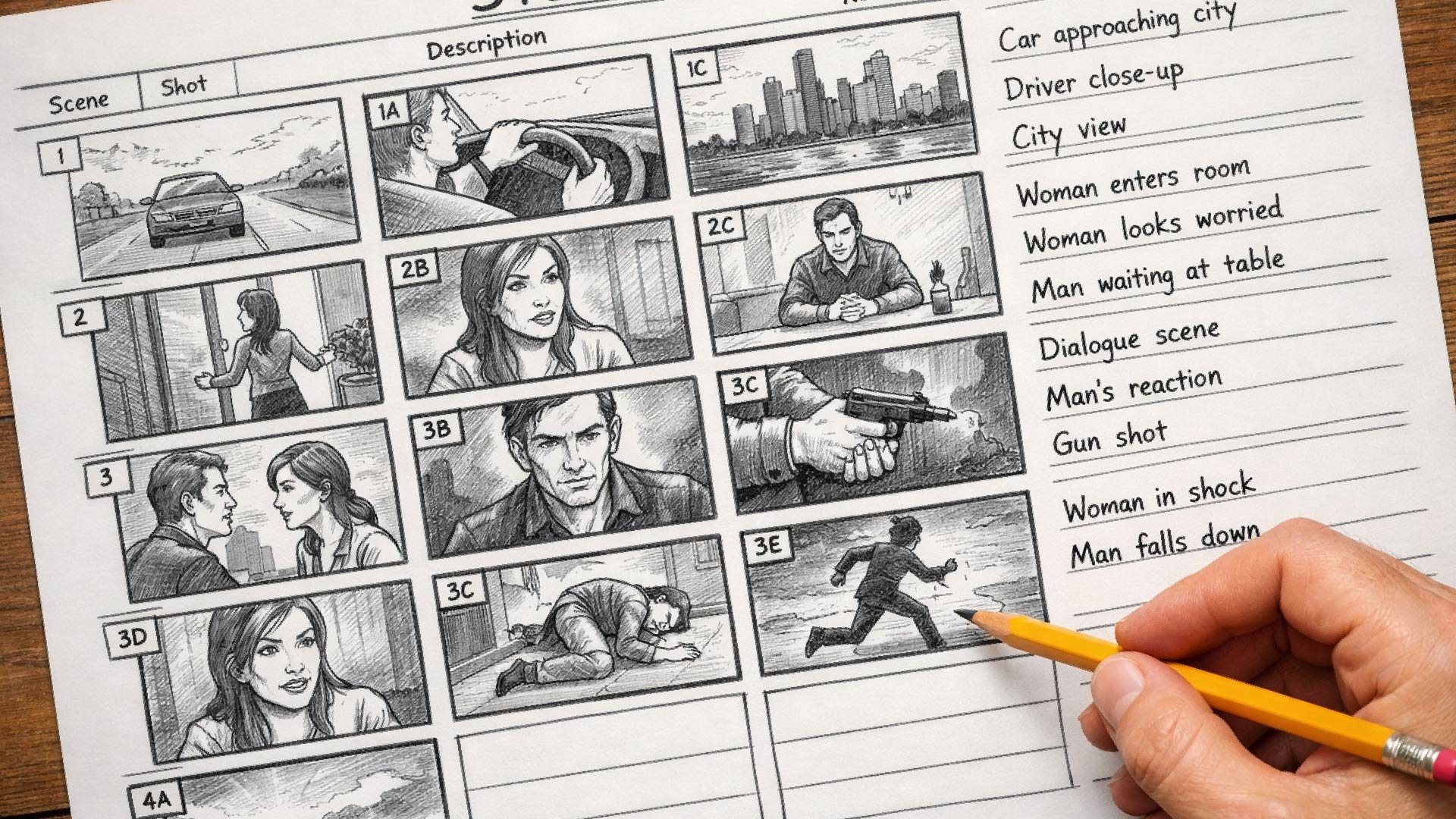
By breaking down the narrative into individual frames, storyboarding helps in structuring the storyline. Designers can carefully plan the sequence of events, ensuring a logical and engaging progression that resonates with the audience. We can look at film storyboard examples such as the ones above to see how animation and motion graphics are used in the process.

film storyboard examples

Enhancing Communication:

Collaboration and Feedback:

Storyboards act as a communication tool within the creative team. Designers, animators, and clients can collaborate effectively by visualizing and discussing the intended animation sequence. Feedback can be provided early in the process, preventing misunderstandings later on.

Client Understanding:

For client-based projects, storyboarding becomes an invaluable tool for conveying ideas. Clients can grasp the concept and flow of the animation more easily through visual representation, leading to a smoother approval process. Before creating their specific  storyboard, it can be beneficial to go through film storyboard examples to see which style will fit their film the best. 

film storyboard examples

Time and Resource Management:

Efficient Workflow:

Having a well-defined storyboard streamlines the production process. Designers can focus on executing the animation rather than making decisions on the fly. This efficiency is particularly crucial in meeting deadlines and delivering high-quality work.

Resource Allocation:

Storyboarding aids in identifying the resources required for the project accurately. From the number of frames needed to the complexity of animations, designers can plan and allocate resources efficiently, preventing unnecessary delays or rework.

Motion Designers will use storyboarding with all these points in mind and plan the final sequence working out any timing issues, camera positions, animation intricacies and keyframes. The storyboard can be roughly sketched or very detailed depending on the requirements and how complex the final motion graphic will be. 

In the dynamic world of motion graphic design, where every second counts, storyboarding emerges as a linchpin for success. It not only nurtures creativity but also ensures a smooth and effective workflow. From conceptualisation to execution, a well-crafted storyboard sets the stage for a visually compelling narrative, making it an indispensable tool in the arsenal of motion graphic designers.

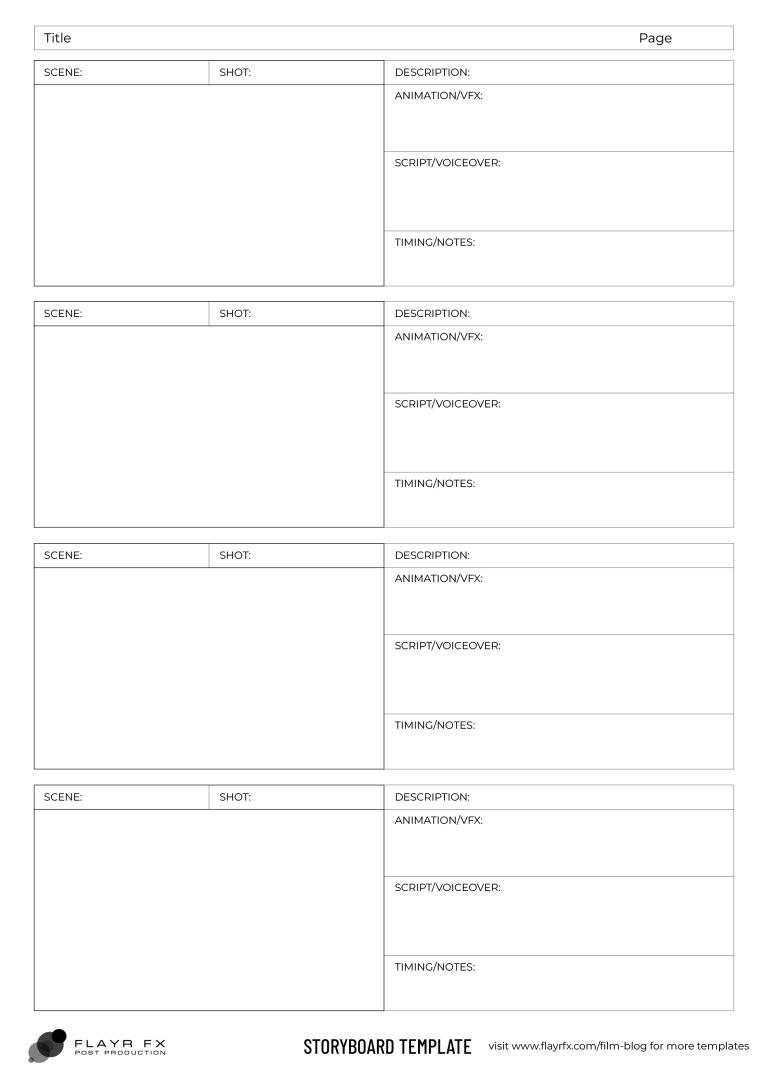
Motion Design Storyboard Templates

Motion Design Storyboard – A4 Vertical (4 Panels)

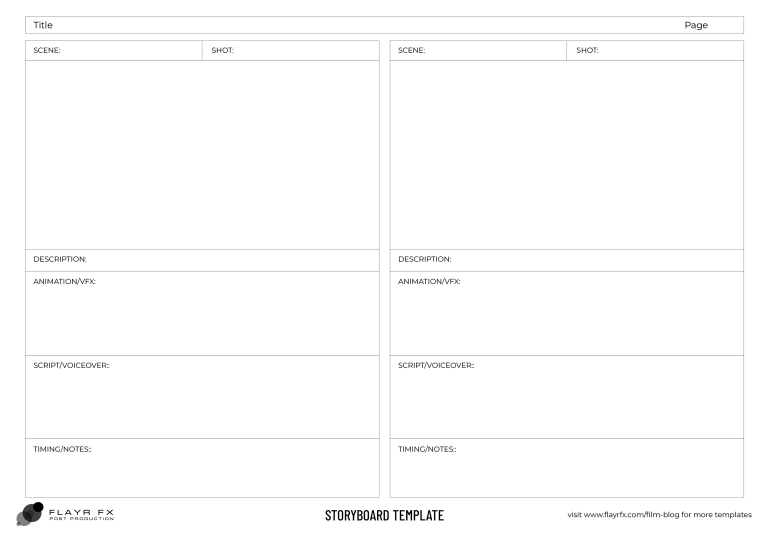
Motion Design Storyboard – A4 Horizontal (2 Panels)

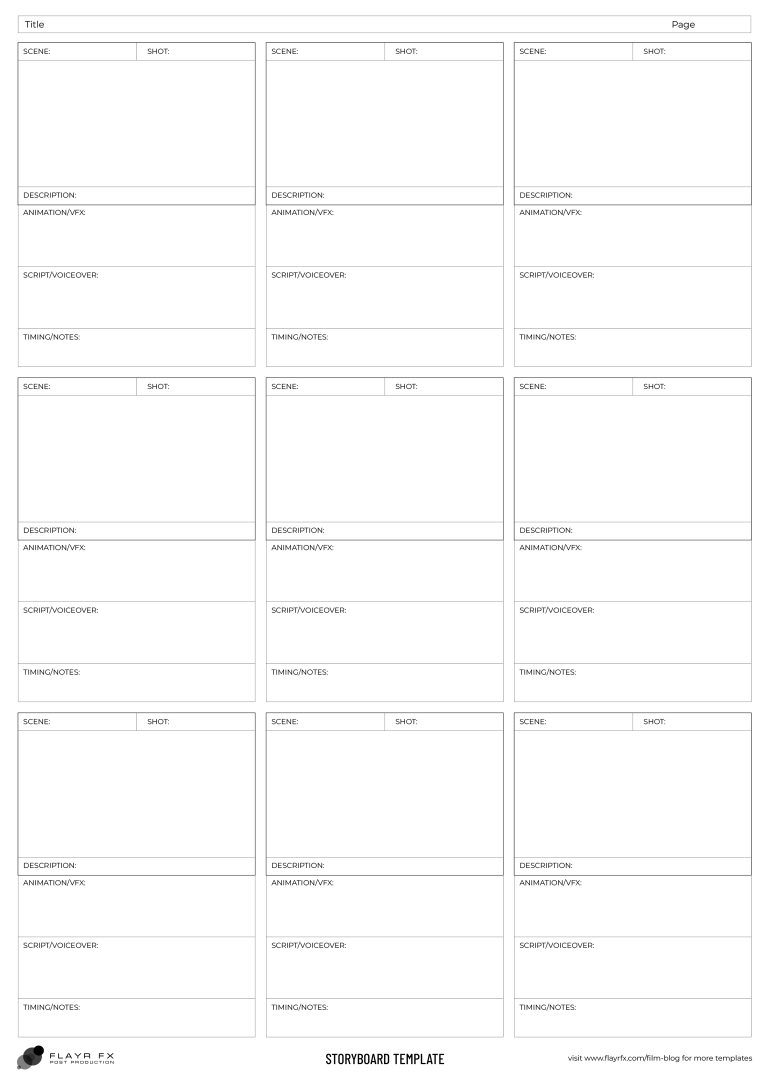
Motion Design Storyboard – A3 Verticle (9 Panels)

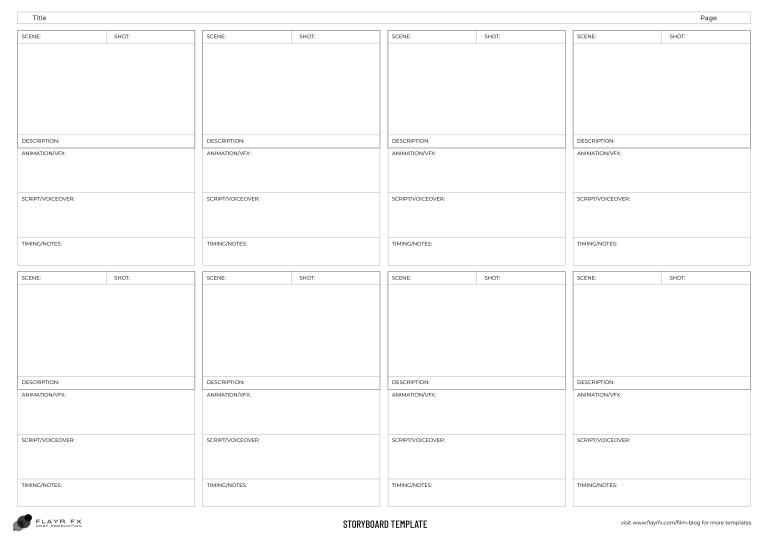
Motion Design Storyboard – A3 Horizontal (8 Panels)

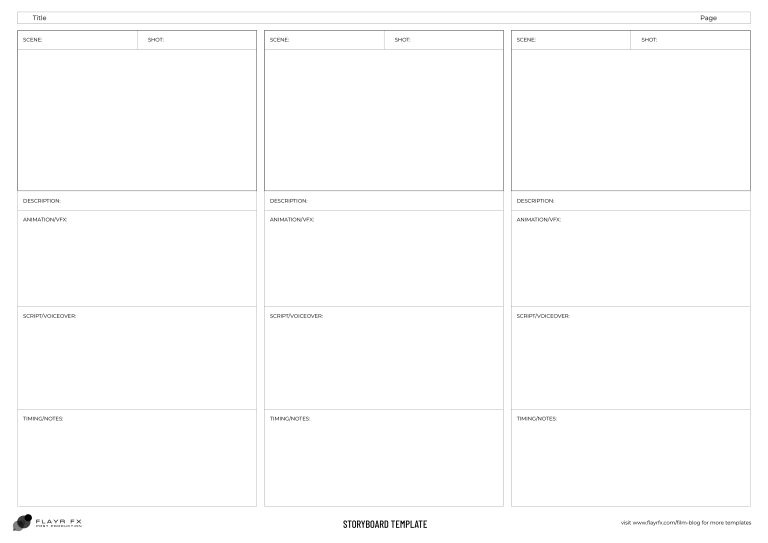
Motion Design Storyboard – A3 Horizontal (3 Panels)

Jamie Steedman
Follow me
Leave a comment